
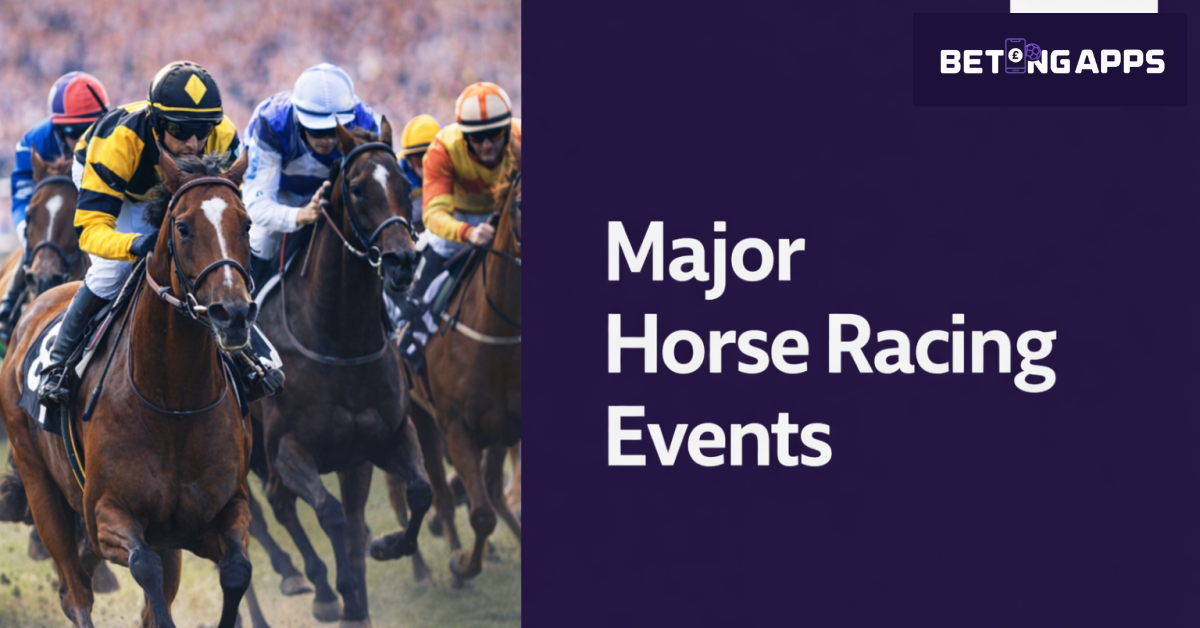
Major horse racing events sit at the centre of the UK racing calendar and drive the biggest spikes in interest, pricing, and market coverage at bookmakers. Fixture dates, race types, and entry rules vary by meeting, so event context affects how you assess form, conditions, and typical betting markets.
Returning visitors usually focus on what changes year to year, including scheduling, going, field size, and the mix of bet types and offers available at each meeting. Event-level rules and race conditions shape the risks, the information available pre-race, and the practical betting options on the day.
Major UK Jump Racing Festivals
Major UK jump racing festivals concentrate the highest-profile National Hunt races into a few days, with multiple Grade 1 contests, competitive handicaps, and large field sizes. Festival schedules affect field strength, trainer targets, and market liquidity, which directly influences price movement and each-way terms.
Race conditions vary by venue and time of year, including track direction, undulations, typical going, and the prevalence of novice races. Festival understanding also supports safer betting decisions, because stake planning, non-runner rules, and enhanced place terms often differ by bookmaker and race type.
Cheltenham Festival
Cheltenham Festival is a four-day meeting in March at Cheltenham Racecourse, centred on Grade 1 National Hunt racing across hurdles and steeplechases. Cheltenham’s left-handed, undulating track and stiff finish influence how races develop, particularly in strongly run championship events.
Cheltenham Festival race cards include a high proportion of novice contests and handicaps alongside championship races. Each-way terms often change with field size, so confirmation of runner numbers and dead-heat rules matters for settlement.
Aintree Grand National Festival
Aintree Grand National Festival is a three-day meeting in April at Aintree Racecourse, featuring Grade 1 races and the Grand National. Aintree’s Grand National course uses unique fences and distinct safety and eligibility rules compared with standard steeplechase tracks.
Aintree’s flat, left-handed Mildmay course hosts the majority of non-National races during the meeting. Bookmaker markets for the Grand National often show earlier price volatility, so checking final declarations, reserve lists, and non-runner no bet terms affects risk and returns.
Punchestown Festival
Punchestown Festival is a major National Hunt meeting in late April or early May at Punchestown Racecourse in Ireland. UK-focused markets typically cover the headline races, with attention on horses that ran at Cheltenham and Aintree earlier in the spring.
Punchestown’s right-handed track and late-season timing change the race context, including recovery times, ground conditions, and trainer patterns. Bet settlement follows the rules of the bookmaker and the governing body for the race, so checking each-way place terms and non-runner treatment remains important.
Scottish Grand National Festival
Scottish Grand National Festival is an April meeting at Ayr Racecourse, headlined by the Scottish Grand National. Ayr’s left-handed track and long straight often suit strong gallopers, which impacts pace analysis and stamina requirements in staying chases.
Field sizes in feature races increase the importance of place terms and deductions for non-runners. Market depth can be thinner than at Cheltenham or Aintree, so price changes close to the off often reflect late money and going updates.
Bet365 Gold Cup
Bet365 Gold Cup is a late-season handicap chase at Sandown Park, typically staged in April as a key end-of-season target. Sandown’s right-handed track, stiff uphill finish, and emphasis on jumping under pressure often shape how the race is run.
Handicap conditions make weight, official ratings, and recent runs central to assessment. Checking the final field and each-way places matters because runner numbers often determine whether bookmakers pay three or four places.
Kempton Christmas Festival
Kempton Christmas Festival is a Boxing Day meeting at Kempton Park, with additional high-grade racing across the festive period. Kempton’s right-handed, flatter profile and emphasis on speed make it distinct from more galloping tracks.
Christmas racing also brings condensed schedules and variable going, which affects form lines from different venues. Bookmaker offers often increase during the festive period, so verifying wagering requirements, eligibility, and settlement rules supports clearer decision-making.
Major UK Flat Racing Festivals
Major UK Flat racing festivals group multiple high-profile meetings into a short calendar window. Festival schedules affect race quality, field sizes, media coverage, and liquidity in betting markets. UK-licensed bookmakers price these races early, then react quickly to draws, going changes, declarations, and non-runners.
Royal Ascot, Epsom’s Derby meeting, Glorious Goodwood, Doncaster’s St Leger meeting, and British Champions Day sit among the most prominent fixtures. Each festival combines headline Pattern races with deep supporting cards, so markets range from Group 1 win betting to handicaps and special markets. Checking race conditions, distances, and eligibility at each meeting supports more accurate comparisons between form lines.
Royal Ascot
Royal Ascot is a five-day Flat meeting at Ascot in June. Royal Ascot features multiple Group 1 races across sprint, mile, and staying divisions, plus competitive handicaps that attract large fields.
Royal Ascot race conditions often depend on age and sex allowances, and some races restrict entry by rating or prior performance. Ascot’s straight track races place extra focus on draw and pace scenarios, particularly in big-field sprints. Going descriptions at Ascot regularly shift during the week, so late price movement often follows updated clerk-of-the-course reports and rainfall.
The Derby Festival At Epsom
The Derby Festival at Epsom centres on The Derby and The Oaks, both Group 1 Classics for three-year-olds. Epsom’s unique left-handed, undulating track and the camber into Tattenham Corner create a distinct test that does not always translate directly to other courses.
The Derby and Oaks provide a key three-year-old form reference for the rest of the season, including targets at Royal Ascot and later summer meetings. Bettors often treat the draw, confirmed pace angles, and course experience as major inputs at Epsom because track position and balance through the turns affect finishing effort.
Glorious Goodwood
Glorious Goodwood is a five-day festival at Goodwood in late July or early August. Goodwood stages a mix of Group races and large-field handicaps, including races over sprint, mile, and intermediate distances.
Goodwood’s turning track and downhill sections increase the importance of tactical speed and positioning. Low margins between runners in handicaps often produce tighter markets, especially when field sizes remain high at declaration stage. Going at Goodwood changes quickly in dry spells, so updated going reports often influence prices close to the off.
St Leger Festival (Doncaster)
The St Leger Festival at Doncaster features the St Leger Stakes, the final British Classic of the season and a Group 1 staying test for three-year-olds. Doncaster’s Town Moor is a wide, galloping track that suits strong travellers and stamina-focused pedigrees.
The meeting provides a clear pathway into autumn staying races for both three-year-olds and older horses. Race analysis often centres on distance progression, previous performance on easier ground, and whether a runner stays beyond 1m4f. Doncaster declarations and non-runner updates matter in staying races because pace and field composition influence how stamina is tested.
British Champions Day (Ascot)
British Champions Day is a one-day autumn meeting at Ascot that stages several top-level races across sprint, mile, middle-distance, and staying categories. British Champions Day attracts established older horses as well as late-developing three-year-olds stepping into open company.
Ascot’s autumn ground often rides slower than in summer, so proven soft-ground form becomes more relevant. British Champions Day markets respond strongly to going changes and final declarations because fields often include runners with targeted campaigns and specific ground requirements. British Champions Day completes the Flat season narrative by consolidating championship-level form into one card.
Major Irish Horse Racing Events
Irish horse racing delivers Grade 1 Flat and National Hunt fixtures that shape season narratives, impact championship markets, and drive high-liquidity betting. Irish feature meetings also attract UK runners and UK bookmakers, so prices and terms often mirror major British events.
Key differences sit in race codes, calendar position, and entry profiles. Leopardstown and the Curragh anchor elite Flat weekends, while Leopardstown and Galway deliver major National Hunt and mixed-card interest. Each meeting brings specific race types, field sizes, and non-runner risk, which affects ante-post and each-way betting.
Irish Champion Stakes Weekend (Leopardstown)
Irish Champion Stakes Weekend is a late-summer Flat meeting at Leopardstown Racecourse in Dublin, headlined by the Group 1 Irish Champion Stakes. The card typically attracts top middle-distance horses from Ireland, Britain, and wider Europe, so markets often move quickly after declarations and draw positions.
Large-stake bets often focus on proven Group form and track suitability. Leopardstown’s left-handed, galloping track places emphasis on pace and positioning, which matters for in-running betting and “to be placed” markets.
Checks that affect value and settlement include:
- Non-runner and “run or not” terms on ante-post bets, especially for Group 1 targets
- Going changes after Irish rainfall, which affects proven soft-ground runners
- Draw and pace map expectations, particularly in big-field supporting races
Irish Champion Stakes Weekend suits bettors who prefer top-level form lines and tighter spreads compared with major handicaps.
Irish Derby Festival (Curragh)
Irish Derby Festival is a summer Flat meeting at the Curragh in County Kildare, centred on the Group 1 Irish Derby over 1m4f. The Irish Derby acts as a major Classic for three-year-olds and often includes runners stepping up from the Epsom Derby or key trial races.
The Curragh’s wide, sweeping track places a premium on stamina and sustained finishing speed. Ante-post markets often reflect trial results and trainer intent, while day-of-race markets react strongly to going and late jockey changes.
Common betting considerations include:
- Each-way terms and place counts, which vary by bookmaker and field size
- Pace and race position, as the Curragh often rewards strong stayers with clear runs
- Supplemented entries and late changes in targets, which alter market shape close to declarations
Irish Derby Festival fits bettors who track three-year-old progression and prefer established Classic trial pathways.
Galway Races Summer Festival
Galway Races Summer Festival is a multi-day summer meeting at Ballybrit Racecourse in Galway, known for big-field handicaps across both Flat and jumps. Competitive fields often produce wider price ranges and higher variance, which influences stake sizing and market selection.
Galway’s undulating track and turning nature increase the importance of draw, track position, and proven handling of tight bends. Bookmakers often offer enhanced each-way terms on selected races, but terms differ by race and day.
Warning signs for avoidable mistakes include:
- Overlooking place terms that change between races on the same card
- Ignoring draw bias and crowding risk in large fields
- Taking early prices without checking non-runner rules for handicaps with wide entries
Galway Races suits bettors who prefer handicaps, each-way strategies, and race-by-race market shopping.
Dublin Racing Festival
Dublin Racing Festival is a National Hunt meeting at Leopardstown in early February, staged as a key lead-in to the Cheltenham Festival. The schedule regularly features Grade 1 hurdles and chases, and results often reshape Cheltenham ante-post markets.
Leopardstown’s winter ground and strong pace profiles place emphasis on jumping accuracy and stamina. Non-runner risk matters for ante-post bets because trainers often use Dublin runs to confirm targets.
Practical checks before betting include:
- Ground descriptions and rainfall, as softer conditions raise faller and stamina risk
- Race fitness and recent runs, since some yards use the meeting as a stepping stone
- Cheltenham implications, where post-race price moves affect the value of holding or trading ante-post positions
Dublin Racing Festival suits bettors who follow National Hunt form cycles and use Irish Grade 1 evidence to inform spring targets.
Major International Horse Racing Events
Major international horse racing events draw elite runners, leading jockeys, and global wagering interest. Meeting formats vary by country, with differences in race distance, track direction, field sizes, and qualification routes. Time zones and local rules also affect how UK bettors place bets, follow markets, and assess form lines.
International cards often include multiple Group or Grade races, which influences each-way terms, market liquidity, and price movement. UK bookmakers also apply event-specific rules on dead-heats, non-runners, Rule 4 deductions, and each-way place terms, so checking the relevant rules before betting supports accurate stake and return expectations.
Prix De L’Arc De Triomphe (France)
Prix de l’Arc de Triomphe is a Group 1 flat race run at ParisLongchamp, typically over 2,400 metres. The race sits at the end of the European middle-distance season, so form assessment often focuses on how runners perform at 10 to 12 furlongs and on ground described under French going reports.
ParisLongchamp’s configuration and autumn ground conditions influence pace and positioning. UK bettors often compare Arc contenders through established European trials and prior Group 1 performances, while allowing for differences in field shape and race tempo.
Breeders’ Cup (United States)
Breeders’ Cup is a two-day festival of championship Thoroughbred races held in the United States, with race grades and surfaces that differ from European conditions. Dirt and turf racing styles vary, so past performances on the same surface and over similar trip matter more than headline form from another code or region.
US race times often fall into UK evening or late-night viewing, which affects when markets settle and when late price moves occur. UK bookmakers may offer event markets across multiple races, so reviewing each race’s surface, draw impact, and pace setup supports more consistent selection checks.
Melbourne Cup Carnival (Australia)
Melbourne Cup Carnival is a multi-day meeting at Flemington, headlined by the Melbourne Cup, a major handicap over 3,200 metres. The handicap format places emphasis on weight allocations and staying profiles, with international runners often arriving via local lead-ups or long-distance campaigns elsewhere.
Australian race pace and track conditions differ from many European equivalents, so UK bettors often focus on proven stamina, travel record, and suitability to firm or fast ground. Bookmaker each-way terms and place counts vary by operator and field size, so confirming those terms matters before staking.
Dubai World Cup Night (UAE)
Dubai World Cup Night is a feature meeting at Meydan, with high-value races across dirt and turf. The card attracts runners from Europe, the US, and Asia, so form lines converge from different jurisdictions, with surface preference often deciding performance.
Meydan’s dirt races reward specific running styles and prior dirt evidence. UK bettors benefit from separating turf and dirt form, checking recent prep races, and confirming local rules on non-runners and deductions where relevant.
Japan Cup (Japan)
Japan Cup is a premier international Group 1 race run at Tokyo Racecourse, typically over 2,400 metres on turf. The race often features top Japanese runners alongside international challengers, with domestic form sometimes under-rated by bettors who rely only on European or US lines.
Tokyo’s track characteristics and the Japanese racing tempo can change how overseas form translates. UK bettors often improve accuracy by checking sectionals where available, identifying proven 12-furlong turf ability, and noting how travel and acclimatisation affect visiting runners.
Race Types And Key Terms For Major Meetings
Major meetings use consistent race codes and official terms, but the meaning changes by race type, track, and conditions. Clear definitions help you compare races across festivals and interpret racecards, results, and betting rules accurately.
Race type also affects typical pace, jumping risk, and the impact of ground and weather. Knowing the core terms reduces mistakes when moving between meetings that mix Flat and Jump racing or stage multiple race classes on the same card.
Flat Racing Vs Jump Racing
Flat racing is a horse racing code run without obstacles over set distances on turf or all-weather. Jump racing is a code run over obstacles, either hurdles or fences, and usually over longer distances.
Flat races often place more emphasis on speed, positioning, and the draw, especially on turning tracks and over shorter trips. Jump races place added emphasis on stamina, jumping accuracy, and race rhythm, with fallers and non-finishers more common than on the Flat.
Handicaps, Conditions Races, And Group/Grade Races
Handicap races allocate different weights to runners to level the field. British Horseracing Authority handicap marks (official ratings) set the basis for the weights, with higher-rated horses carrying more weight than lower-rated horses.
Conditions races set weights using published conditions such as age, sex, past wins, or penalties. Conditions races include maidens and novices, which restrict eligibility based on whether a horse has won before, and can also include listed events.
Group races (Flat) and Grade races (Jump) represent the top tiers, with set weights and strict entry conditions. Group 1 and Grade 1 races carry the highest status, while Group 2/3 and Grade 2/3 sit below, often with penalties or allowances applied.
Field Size, Draw Bias, And Course Configuration
Field size is the number of declared runners that line up at the start. Larger fields increase traffic risk and raise the chance of interference, while smaller fields often reduce cover and change pace dynamics.
Draw bias refers to an advantage linked to stall position in Flat races. Draw bias varies by course layout, distance, rail position, and going, so a favourable draw at one meeting does not translate directly to another.
Course configuration describes features such as left-handed or right-handed turns, the number of bends, gradients, and the length of the run-in. Course configuration influences where races are won and lost, particularly in big-field handicaps and on tracks with short straights.
Going, Weather, And Abandoned Races
Going is the official description of ground conditions, ranging from hard to heavy on turf, with “standard” terms commonly used on all-weather. Going affects speed, stamina demands, and the likelihood of horses underperforming if conditions differ from their proven preferences.
Weather changes going through rain, drying wind, or temperature shifts. Clerks of the course update going reports, and rail movements also alter the effective distance and track position.
Abandoned races occur when racing stops before or during a meeting due to unsafe conditions such as waterlogging, frost, high winds, or extreme heat. Operator rules determine settlement for bets if a race is abandoned, voided, or declared no race, so checking the bookmaker’s void and Rule 4 terms supports accurate expectations for returns.
Major Events Betting Markets And Rules
Major event markets commonly include win, each-way, place-only, and specials such as Horse Racing Betting “without the favourite” or group betting.. Understanding how bookmakers apply these rules helps you compare odds properly and avoid avoidable surprises at payout stage, especially when fields change close to the off.
Major-event markets commonly include win, each-way, place-only, and specials such as “without the favourite” or group betting. Bookmaker terms vary by race type, runner count, and the stage at which the bet is placed, so checking the relevant market rules before staking remains the safest approach.
Ante-Post Betting And Rule 4 Deductions
Ante-post betting is a market where bets stay active even if the selection does not run. Bookmakers settle ante-post bets under “all-in” rules, which means non-runners typically count as losing bets unless the bookmaker states otherwise for that market.
Rule 4 deductions apply to many non-ante-post markets when a horse is withdrawn after you place a bet. Bookmakers reduce potential winnings to reflect the removal of a significant runner, with the deduction level linked to the withdrawn horse’s price at the time of withdrawal. Rule 4 usually affects winnings, not the returned stake, and the deduction applies per £ of winnings rather than per £ staked. Ante-post bets usually avoid Rule 4 because the ante-post price already factors in the risk of non-runners.
Each-Way Terms And Place Markets
Each-way betting splits the stake into two bets: one for the win and one for the place. Major events often feature enhanced each-way terms, but the number of places and the place fraction depend on the race type and the number of runners. Bookmakers frequently apply different place terms for handicaps versus non-handicaps, and for large-field festival races.
Place markets differ from the place part of an each-way bet. A place-only bet pays out if the selection finishes in the specified places, but the number of places and settlement rules follow the bookmaker’s market definitions. Paying attention to runner count matters because late non-runners can reduce place terms, particularly in races close to each-way place cut-offs.
Non-Runner No Bet And Best Odds Guaranteed
Non-Runner No Bet (NRNB) is a concession where the bookmaker refunds stakes if the selection does not take part. NRNB typically applies to specific major-event races and only during stated promotional windows, with the market clearly marked as NRNB. NRNB terms vary by bookmaker and race, so an unlabelled ante-post market usually remains “all-in” by default.
Best Odds Guaranteed (BOG) pays at the bigger of the price taken and the Starting Price, provided the selection wins. BOG usually applies to fixed-odds bets struck before the advertised cut-off time and often excludes each-way place-only markets, some enhanced odds, and certain bet types. Bookmakers also apply eligibility conditions such as account restrictions or specific channels, so confirming whether the bet slip displays BOG status helps avoid disputes.
Starting Price, Early Prices, And Price Boosts
Starting Price (SP) is the official on-course starting price returned at the off. Bookmakers use SP as a settlement reference for SP bets and for comparisons under BOG where applicable. SP outcomes reflect market conditions at start time, so SP can differ materially from early prices on festival races with strong public betting.
Early prices are fixed odds offered before the off, and they move as the market reacts to money, news, and non-runners. Price boosts are temporary enhanced odds for a stated selection and market, usually subject to extra restrictions such as maximum stake, limited availability, bet type exclusions, or ineligibility for BOG. Checking the bet receipt wording matters because boosted bets often settle under different price protection rules.
Dead-Heats, Photo Finishes, And Stewards’ Enquiries
Dead-heats occur when two or more runners cannot be separated for a placing. Bookmakers settle dead-heats by splitting the stake and or the payout across the tied positions, depending on the market and finishing position involved. Each-way bets and place markets often involve proportional reductions in returns when a dead-heat affects the final place terms.
Photo finishes and stewards’ enquiries affect settlement timing and results. Bookmakers settle bets on the official result, which means an initial “weighed in” result can change after an objection or enquiry. Understanding that settlement follows the official outcome, not the first past the post, keeps expectations aligned for major-event races where enquiries occur more frequently.
What To Check Before Placing A Bet On A Big Race
Big races attract higher betting volumes, faster price moves, and tighter operational controls at many bookmakers. Terms and market rules affect payout, settlement, and whether a bet counts for promotions, so checking them before staking reduces avoidable disputes.
Key checks focus on rule variations, each-way terms, Cash Out availability, and promotion eligibility. Big-race markets also trigger earlier cut-offs and stronger trader controls, especially close to the off.
Bookmaker Terms, Cut-Off Times, And Rule Variations
Bookmaker rules set how bets settle when conditions change, such as non-runners, abandonments, rescheduled races, or changes to the advertised field. Bookmakers also apply different rules across bet types, including ante-post, day-of-race, and “non-runner no bet” specials, so the label on the market matters.
Check these items before confirming a bet:
- Market type and settlement basis (ante-post versus day-of-race, and whether “non-runner no bet” applies).
- Non-runner treatment for multiples and each-way bets (including deduction rules where relevant).
- Dead-heat rules for win and place parts.
- Abandoned, voided, or rescheduled race rules, including time limits for “same day” settlement.
- Each-way rule basis (place terms set by bookmaker, not the race organiser).
Bookmaker cut-off times also affect what changes after a bet is placed. Price boosts and enhanced place markets often close earlier than the main win market, and some bookmakers restrict edits or cancellations close to the off. A final check of the bet slip time stamp and market name reduces confusion at settlement.
Stakes, Each-Way Place Terms, And Enhanced Place Offers
Stake sizing matters more on big races because each-way terms vary, and enhanced place offers change the effective odds and risk profile. Each-way bets split the total stake into win and place parts, so a “£10 each-way” stake equals £20 total unless the bookmaker states otherwise.
Each-way place terms to confirm before staking include:
- Number of places paid (for example, 3, 4, 5, or more).
- Place fraction (commonly 1/4 or 1/5 of the win odds).
- Minimum runner requirements for the stated place terms.
- Each-way availability for the chosen market (some specials restrict each-way betting).
Enhanced place offers often sit outside standard each-way rules. Enhanced place markets usually price the win and place parts differently or pay extra places with adjusted terms. A check of the place fraction, maximum stake, and whether Rule 4 style deductions apply to the place portion avoids mismatched expectations on returns.
Cash Out Limits, Suspensions, And In-Play Delays
Cash Out is not guaranteed on every market or at every moment, and big races often see more frequent suspensions due to rapid price changes. Bookmakers suspend markets around key events, including the start, stewards’ enquiries, and significant price volatility, which affects the ability to place, amend, or Cash Out a bet.
Important operational limits to confirm include:
- Whether Cash Out is offered on the selected market and bet type (singles, multiples, each-way, specials).
- Minimum odds, maximum stake, or partial Cash Out restrictions.
- Suspension triggers and expected blackout windows around the off.
- In-play availability and any latency or price delay applied to in-play betting.
In-play delays and suspensions increase the risk of rejected bets or price changes between selection and acceptance. Big-race liquidity also attracts quicker trader intervention, so a bet that looks available on-screen may settle at a different price if the bookmaker applies a “price change” acceptance rule.
Free Bet And Bonus Eligibility For Festival Markets
Free bets and bonuses often exclude specific big-race markets or restrict eligibility to certain bet types. Bookmakers commonly apply separate terms for festivals, including minimum odds, eligible markets, and limits on using bonuses for enhanced place or price boost markets.
Check promotion eligibility details before placing the bet:
- Eligible markets (win only, each-way, multiples, ante-post exclusions).
- Minimum odds and stake thresholds, including whether each-way counts as one bet or two parts.
- Whether Cash Out use voids qualification or reduces settlement value for offers.
- Exclusions for boosted odds, enhanced places, or “specials” markets.
- How free bet returns calculate (stake returned or not returned) and withdrawal requirements, if any.
Promotion terms also set expiry dates and qualifying windows, which matter on race days with multiple races and early markets. A quick confirmation of market eligibility and settlement rules keeps the bet aligned with the intended offer conditions.
Watching And Following Major Horse Racing Events
Major horse racing events attract extensive coverage across UK broadcasters, betting apps, and racing media sites. Viewing access, accurate pre-race information, and reliable results data affect how quickly you can track runners, confirm late changes, and interpret performance.
UK horse racing coverage also varies by rights holder and racecourse agreement, so the channel or stream for a meeting often differs between festivals. Using official sources alongside bookmaker feeds helps verify timings, going changes, and non-runner announcements.
UK TV And Streaming Options
ITV Racing shows selected live races on terrestrial TV, with coverage typically focused on weekend cards and major festivals. Racing TV and Sky Sports Racing provide dedicated racing channels with broader daily coverage, subject to subscription and channel availability.
Bookmaker live streams often require an active account and may require a positive balance or recent activity, depending on the operator’s rules. Streaming feeds usually include an in-play picture delay, so race position and commentary may lag behind on-course action or some broadcast feeds. Rights restrictions also apply, so certain meetings appear only on the licensed rights-holder channel rather than on free-to-air TV.
Racecards, Declarations, And Non-Runner Updates
Racecards list the day’s races and the declared runners, alongside key details such as draw (where relevant), jockey, trainer, weight, and official going. Declarations set the confirmed fields after the relevant declaration stage, but late changes still occur through withdrawals, going changes, or jockey substitutions.
Non-runners matter because they change field size, affect each-way place terms, and can trigger Rule 4 deductions in fixed-odds betting. Checking multiple sources reduces the risk of relying on stale data. Useful checks include:
- Official racecourse or racing authority updates for going, inspections, and withdrawals
- Bookmaker racecards for each-way terms and late price changes
- On-course or broadcast announcements for late jockey changes and stalls information
Racecards and updates provide the baseline for following a meeting accurately from first declarations through to the off.
Results, Distances, And Official Ratings
Results pages confirm finishing order, starting prices, winning time, and the official margins between runners. Distances such as “nk” (neck) or “hd” (head) summarise how close the finish is, while larger margins indicate clearer superiority on the day.
Official ratings provide a standardised measure of performance and handicap ability, used to set weights in handicaps and to compare runners across races. Ratings, penalties, and weight carried interact in handicaps, so checking the post-race record alongside the race conditions helps explain why a runner performs better or worse under different terms.
Accurate results data and ratings context make it easier to follow major events beyond the headline winner and understand what the form means for future races.
Responsible Gambling For Festival Betting
Festival betting often involves more races, more markets, and longer sessions than a standard meeting. UK-licensed bookmakers apply safer gambling tools and checks that affect deposits, staking, and account access. Clear limits and support options reduce the risk of chasing losses during busy racing schedules.
UK Gambling Commission rules require operators to provide controls for spending and time, and to intervene when risk indicators appear. Understanding how these tools work helps you keep betting within affordable limits and respond quickly if gambling stops feeling controlled.
Deposit Limits, Time Outs, And Self-Exclusion (GAMSTOP)
Deposit limits restrict how much money goes into a bookmaker account over a set period, such as per day, week, or month. Deposit limits apply to deposits, not losses, so setting a limit before a festival starts offers clearer protection than relying on judgement during betting.
Time out features pause access to an account for a short, fixed period set by the operator. Self-exclusion blocks access for a longer period and supports a reset away from betting activity. GAMSTOP is the UK’s national online self-exclusion scheme for participating UK-licensed online bookmakers and casinos, and it applies across operators rather than a single account.
Checks that improve control during a festival include:
- Set a weekly or monthly deposit limit that fits disposable income and household costs.
- Use a time out after a run of losses or after a long betting session.
- Use GAMSTOP if gambling remains difficult to control across multiple bookmakers.
A deposit limit or time out only works when it stays in place during the highest-risk periods, including evenings and major race days.
Affordability And Safer Gambling Checks
Affordability and safer gambling checks assess whether gambling spend fits a customer’s financial situation. UK-licensed bookmakers use account data and risk indicators, such as increasing deposits, repeated failed deposits, long sessions, or rapid staking changes, to trigger reviews and interventions.
Operators request information when risk indicators suggest potential harm or unaffordable spend. Evidence requests vary by bookmaker but often focus on income and essential outgoings. Outcomes include account restrictions, lower limits, paused promotions, stake caps, or temporary blocks while checks complete.
Practical steps that reduce disruption during a festival include:
- Keep records of deposits and withdrawals across bookmakers rather than viewing each account in isolation.
- Treat bonus funds and free bets as gambling funds, not as savings or income.
- Avoid increasing stakes to recover losses, since this pattern often triggers risk flags and increases harm.
Affordability checks focus on sustainability, so aligning deposits with available disposable income reduces both risk and interruptions.
Where To Get Support In The UK
UK support services provide confidential help for gambling-related harm, including advice for reducing gambling, counselling, and crisis support. Many services also support friends and family affected by someone else’s gambling.
GambleAware provides information and signposting to treatment options in Great Britain. GamCare provides advice, tools, and support, including the National Gambling Helpline. NHS services support assessment and treatment for gambling disorder, and some areas offer specialist clinics. Immediate risk of harm requires urgent support through emergency services.
Support options matter most during festivals because betting frequency rises and decision-making becomes more pressured, so early contact often prevents losses escalating into wider financial or personal harm.
FAQs
Horse racing betting uses specialist terms that affect price, settlement, and value. The answers below focus on UK bookmaker rules and common race conditions found in major UK meetings.
What Are The Biggest Horse Racing Events In The UK?
The biggest UK horse racing events are the major festivals and headline races that attract the highest media coverage, strongest fields, and the largest betting markets. Event schedules and feature races sit under different codes, including Flat and National Hunt.
Major UK events and fixtures include:
- The Grand National (Aintree)
- The Cheltenham Festival (Cheltenham)
- Royal Ascot (Ascot)
- The Epsom Derby Festival (Epsom)
- British Champions Day (Ascot)
- The St Leger Festival (Doncaster)
- Glorious Goodwood (Goodwood)
Race importance also depends on race type and status, such as Group 1 races on the Flat and Grade 1 races over jumps.
What Is The Difference Between A Group Race And A Handicap?
A Group race is a conditions race that uses set weights, or penalties, based on age, sex, and past performance. A handicap is a race where the official handicapper allocates different weights to each horse to equalise their chances.
Group races matter for form because the best horses meet without handicap ratings driving the weights. Handicaps matter for value because weight, rating, and race conditions interact directly with performance and price.
What Does Ante-Post Mean In Horse Racing Betting?
Ante-post is a bet placed on a race before final declarations, often weeks or months in advance. Ante-post odds usually differ from day-of-race prices because the market reflects uncertainty about participation and conditions.
Ante-post terms vary by bookmaker. Non-runner rules are the key risk, because many ante-post markets treat a non-runner as a losing bet unless a specific concession applies.
How Do Each-Way Terms Work For Big-Field Races?
An each-way bet splits the stake into two parts: one part on the horse to win and one part on the horse to place. Each-way place terms state how many places count and what fraction of the win odds applies to the place part.
Each-way terms depend on the race type and field size. Big-field races often pay more places, but the place fraction also affects the return. Each-way terms also interact with dead-heats and Rule 4 deductions, which change settlement in specific situations.
What Happens If A Horse Is A Non-Runner?
A non-runner is a horse that does not take part in the race after a bet is placed. The settlement depends on the bet type, the timing of the bet, and the bookmaker’s rules for that market.
Most day-of-race bets placed after final declarations follow a “non-runner no bet” approach, where the stake returns. Ante-post markets often treat non-runners as losers unless the bookmaker states a non-runner concession for that race.
When Does Rule 4 Apply In Horse Racing?
Rule 4 applies when a horse is withdrawn after a bet is struck and the withdrawal causes a significant change in the market. UK bookmakers apply a deduction to winnings, not to stakes, to reflect the reduced field and shorter revised odds.
Rule 4 deductions vary by the price of the withdrawn horse at the time of withdrawal. Rule 4 often affects fixed-odds bets and the place part of each-way bets, so checking the deduction rate matters before assessing the final return.
Conclusion
Major horse racing events set the calendar for UK racing and create clear spikes in markets, media coverage, and betting volume. Event differences in race class, field size, track characteristics, and going conditions affect pricing and volatility across win, each-way, and multi-race markets.
UK bettors get the cleanest experience by prioritising UK Gambling Commission licensed bookmakers, checking race times and rule variations, and confirming stake limits and each-way terms before placing a bet. A consistent focus on licensing, rules, and market terms keeps decision-making clear across the biggest fixtures.

Joe Kizlauskas is an experienced iGaming writer with over a decade of industry experience covering betting apps, bookmakers, and online gambling products in the UK market. His work focuses on how betting apps operate in practice, including market coverage, app performance, payments, and regulatory standards.
Alongside his professional background in iGaming, Joe has extensive first hand exposure to the sports covered on this site. He played football for more than 30 years and has regularly attended horse racing events, giving him a practical understanding of how betting markets relate to real sporting contexts.
This combination of industry knowledge and sporting experience informs the analysis on BettingApps.uk.com. All content is written with a focus on clarity, accuracy, and UK regulation, ensuring comparisons are grounded in how betting apps function rather than promotional claims.