
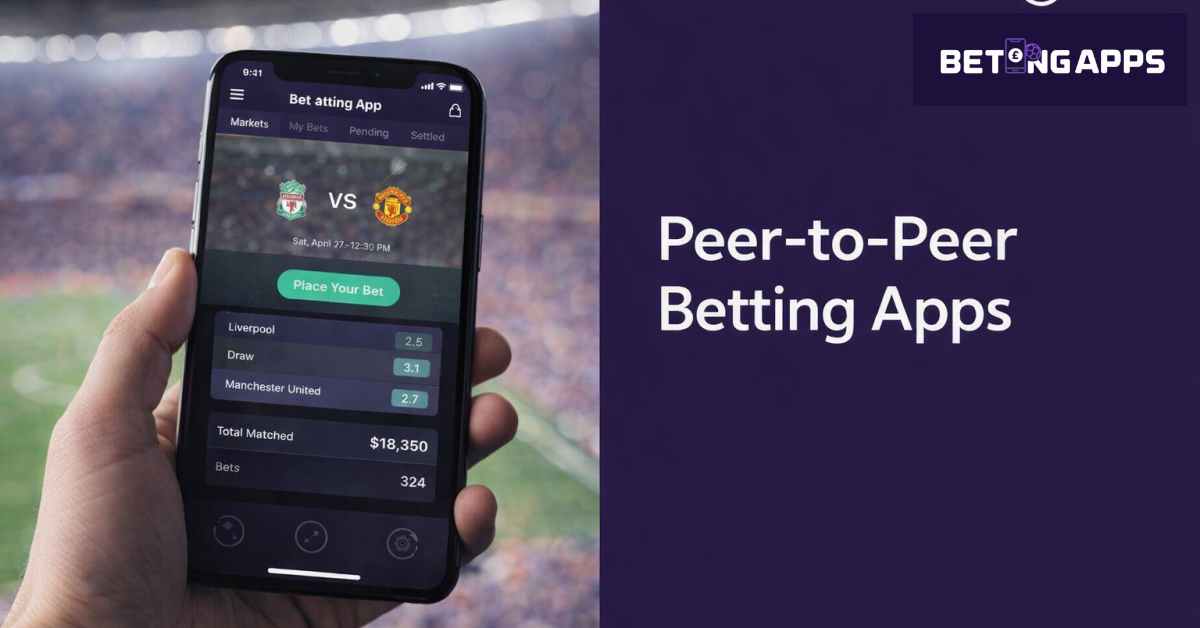
Peer-to-peer betting apps match you directly with another bettor, rather than routing the bet through a traditional bookmaker. One user offers odds and another user accepts them, with the operator providing the app, bet matching, and settlement.
Peer-to-peer betting changes how prices form and how risk sits, so checks around fees, liquidity, and rule enforcement matter. Regulation also matters because UK-licensed operators must meet UK Gambling Commission requirements on fairness, customer funds, identity checks, and safer gambling tools.
What Peer-to-Peer Betting Apps Are
Peer-to-peer betting apps match one bettor directly against another, instead of placing every bet against a bookmaker. The app sets the rules for how offers are listed, matched, settled, and how disputes are handled, and it usually charges a fee for running the market.
UK bettors see peer-to-peer betting most often in sports and political markets where odds move quickly. Understanding how matching, pricing, and fees work helps you estimate the true cost of a bet and the likelihood of getting matched at the price you want.
What Peer-to-Peer Betting Means
Peer-to-peer betting means one user offers odds and stake, and another user accepts those terms. The offer stays open until another user matches it, it expires, or the user cancels it.
Peer-to-peer apps typically support both sides of a market, such as backing an outcome (betting it happens) and laying an outcome (betting it does not happen). Settlement follows the event result, and the app applies its fee structure based on its terms.
How Peer-to-Peer Betting Differs From Bookmaker Betting
Bookmaker betting places you against the bookmaker’s quoted price, with the bookmaker taking the other side of the bet. Peer-to-peer betting places you against another user, so the available odds depend on what other users offer and accept at that moment.
Peer-to-peer apps also change how prices form. Bookmaker odds reflect the bookmaker’s risk management and margin, while peer-to-peer prices reflect supply and demand from users, plus any fees charged by the operator. Matching risk also differs, because a bet may not get matched in full or at all if there is not enough liquidity at your chosen price.
Exchange Betting Vs Peer-to-Peer Betting Apps
Exchange betting is a common form of peer-to-peer betting where an operator runs a central exchange and matches back and lay bets between users.. Many peer-to-peer betting apps operate as exchange-style markets, even if they present the experience in a mobile-first format.
Some apps describe peer-to-peer betting more broadly, including fixed-odds user offers or wager formats that resemble “challenge” bets. The practical check is whether the counterparty is another user and whether the bet requires matching, because both factors affect price availability, speed of placement, and fees.
How Peer-to-Peer Betting Apps Work
Peer-to-peer betting apps use an exchange model where customers bet against other customers rather than a bookmaker. The app matches opposing views on an outcome, records the contract, and settles it once the event result becomes official. UK users usually see the same core flow across sports, politics, and other regulated markets, but pricing, charges, and settlement rules vary by operator.
Exchange betting affects how odds form, how quickly bets match, and what happens when money is not available at the price requested. Understanding back and lay bets, liquidity, and commission helps you check the real cost of a bet and the likelihood of getting matched.
Back Bets And Lay Bets
A back bet is a bet that an outcome happens. A lay bet is a bet that an outcome does not happen, which makes the layer the counterparty to a backer.
A back bet works like a traditional bookmaker bet: stake is the amount risked, and profit depends on the odds. A lay bet creates liability: the layer risks paying the backer’s winnings if the backed outcome occurs. Exchange apps display lay liability alongside the lay stake because the potential loss is often higher than the stake.
Key checks before placing a lay bet include:
- The liability amount shown for the selected odds and stake
- Available balance and any funds tied up in open positions
- Market rules on what counts as a win or loss for the selection
Back and lay positions can also combine. A user can back first and later lay the same selection to reduce risk or lock in a price difference, subject to matching and commission.
Matching, Liquidity, And Unmatched Bets
Matching is the process where the app pairs a back bet with a lay bet at the same odds. Liquidity is the amount of money available in the market at different prices, which affects how quickly and how fully a bet matches.
An order remains unmatched when no counterparty accepts the requested odds. An app may show a partially matched bet when only part of the stake finds liquidity. Unmatched portions usually stay in the market until one of these happens: the bet matches, you cancel it, or the market suspends or closes under the operator’s rules.
Liquidity varies by sport, event popularity, and time to start. Lower liquidity increases the chance of partial matches and wider gaps between available back and lay prices, which changes the effective price you receive.
Pricing, Odds, And Market Movement
Exchange odds form from supply and demand rather than a bookmaker’s compiled price. A higher price attracts layers only if layers accept the risk at that return, and a lower price attracts backers only if backers accept the lower payout.
Market movement happens when new information changes demand, such as team news, weather, or changes in traded volume. Price movement can also occur because of order book depth: a large stake may consume the best available prices and match at worse odds for the remaining amount.
An exchange app typically shows available prices at multiple levels. Checking both the best price and the money available at that price helps you estimate whether the full stake matches without slipping to a different odds level.
Commission, Fees, And Other Charges
Commission is the main charge on many peer-to-peer betting apps. Operators usually apply commission to net winnings on a market, not to stakes, but the exact basis depends on the operator’s terms.
Other charges sometimes apply, such as:
- Premium or tiered charges based on long-term profitability or activity
- Market-specific fees for certain products
- Currency conversion fees if the account uses a non-GBP balance
Commission changes the true return compared with the displayed odds. Checking the commission rate and how the operator defines “net winnings” on a market gives a clearer view of expected profit after charges.
Settlement, Payouts, And Disputes
Settlement occurs when the event result becomes official under the operator’s market rules. The app calculates winners and losers, applies commission or fees, and releases funds tied to matched bets. Unmatched bets usually lapse at market closure, but some operators apply different rules for suspensions and in-play changes.
Disputes usually relate to market rules, event voiding, or result sources. Operators typically follow a stated official source and apply rules for abandoned events, late changes, and disqualifications. Checking the operator’s rules for the specific market type, such as “match odds” versus “to qualify”, helps you understand how settlement decisions occur and when a bet voids.
Legal And Regulatory Position In The UK
Peer-to-peer betting apps that accept UK customers operate under UK gambling law when they offer betting services to people in Great Britain. Regulation affects account access, verification, payment processing, and the protections available if something goes wrong. A key distinction is whether the app acts as the betting operator, or only provides software while an entity holding the licence manages betting and customer funds.
UK rules also apply differently depending on product type, such as betting exchanges, sportsbook betting, or pool betting. Checking who holds the licence, what activities the licence covers, and where customer money sits helps clarify what protections apply.
UK Gambling Commission Licensing And What It Covers
A UK Gambling Commission (UKGC) licence is the legal permission required to offer remote betting to customers in Great Britain. A peer-to-peer betting app needs an appropriate remote operating licence for the gambling activity it provides, such as betting (including betting exchange) or pool betting, depending on the product design.
A UKGC licence covers core obligations such as fairness, clear terms, complaints handling, and safer gambling measures. A UKGC licence also links the operator to oversight and enforcement, including the ability to restrict or revoke licences for non-compliance. Licence checks usually focus on the operator name and the licensed website domain shown on the UKGC public register, rather than app-store branding alone.
Identity Checks, KYC, And Source Of Funds
Customer verification is a standard requirement for UK-licensed remote betting. Identity checks confirm who you are and help prevent fraud and underage gambling. Verification commonly includes name, address, and date of birth checks, and the operator may request documents when automated checks do not match.
Source of funds and affordability-related checks form part of anti-money laundering and risk management controls. An operator may request bank statements, payslips, or evidence of savings if account activity triggers internal thresholds, such as high deposits, large withdrawals, or unusual betting patterns. Delays to withdrawals and stake limits often occur until verification completes, because the operator must meet legal and regulatory duties before processing funds.
Safer Gambling Tools And Operator Duties
UK-licensed operators provide safer gambling tools designed to help you control time and spend. Common tools include deposit limits, loss limits, time-outs, and self-exclusion. UK self-exclusion usually integrates with operator systems, and many operators also support GAMSTOP for multi-operator self-exclusion for online gambling, where applicable to the licence and product.
Operator duties include monitoring for signs of harm, intervening when risk indicators appear, and providing clear information about odds, fees, and settlement rules. Peer-to-peer products also need clear rules on matching, cancellation, settlement times, and how disputes get handled, because another customer’s position influences whether a bet matches and when it settles.
Tax Position For UK Customers
Betting winnings are not subject to UK Income Tax or Capital Gains Tax for most individual customers, because gambling is not treated as taxable income in the UK in typical cases. The operator pays gambling duties where applicable, rather than the customer paying tax on winnings.
Tax treatment changes in unusual circumstances, and personal tax status depends on individual facts. A qualified tax adviser provides the correct position for complex situations, but routine peer-to-peer betting returns generally do not require a UK tax declaration for winnings.
Key Features To Compare In Peer-to-Peer Betting Apps
Peer-to-peer betting apps differ in market coverage, pricing tools, and how reliably bets get matched. Comparing features helps you judge whether an app suits the sports you bet on, the stake sizes you use, and the speed you need for in-play markets.
UK bettors also need to factor in costs, payment limits, and support standards, because these affect value, access to funds, and dispute resolution. The checks below focus on the features that most often change outcomes in day-to-day use.
Sports And Markets Available
Market range determines whether an app consistently offers the events and bet types needed. Peer-to-peer betting depends on other users offering prices, so niche sports and lower-profile leagues often show fewer options and weaker pricing.
Check selection across core areas:
- Sports you bet regularly, including UK-focused competitions
- Pre-match markets such as match odds, handicaps, totals, and correct score
- In-play availability for the same sports and leagues
- Each-way and place-style markets where relevant (for example, horse racing)
An app with wide coverage still needs consistent availability at the times you bet, because peer-to-peer markets fluctuate with user activity.
Odds Format, In-Play Tools, And Cash Out
Odds display and trading tools affect speed and error rates when placing bets. Peer-to-peer betting apps often support both back and lay bets, so the interface needs to show the side selected, the price, and the stake or liability clearly.
Key checks for pricing and live betting:
- Supported odds formats (fractional, decimal, and American) and whether format changes apply across the app
- In-play delay rules and how price updates display during volatile periods
- Partial matching behaviour when full stakes are not available at one price
- Cash out availability, including whether cash out applies to partially matched bets
Cash out terms vary by operator and market conditions. An app may remove cash out during suspension, low liquidity, or rapid price movement.
Commission Rates And Minimum Stakes
Peer-to-peer betting apps usually charge commission on net winnings in a market, rather than building margin into every price. Commission structures change the real cost of betting, particularly for frequent bettors or small-margin strategies.
Compare pricing and entry rules:
- Commission rate and whether it varies by sport, market, or customer tier
- Commission calculation method, including treatment of void bets and partial matches
- Minimum stake and minimum liability for lay bets
- Maximum payout limits where stated
Minimum stakes and liability rules matter most on exchanges-style apps, because laying requires enough funds to cover the worst-case outcome.
Liquidity Indicators And Market Depth
Liquidity shows how much money is available to match at current prices. Market depth affects whether a bet matches instantly, matches in parts, or forces a worse price to secure a full stake.
Look for indicators that support informed pricing:
- Amount available to back and lay at each price point
- Depth ladder or price steps beyond the best available odds
- Traded volume for the event or market
- Bet matching status updates, including unmatched and partially matched amounts
Higher visible depth usually supports tighter spreads and faster matching, which matters most in-play and close to kick-off.
App Usability, Speed, And Reliability
Usability affects placement accuracy and response time, especially when prices change quickly. Stability and load performance also matter, because peer-to-peer markets often peak during major fixtures.
Practical checks for day-to-day use:
- Steps required to place a back or lay bet, including confirmation screens
- Speed of price refresh and bet submission
- Session timeouts and re-authentication prompts
- Outage handling, including what happens to unmatched bets during disruptions
Reliability links directly to execution risk, because delays increase the chance of missing a price or placing an unintended stake.
Payment Methods, Withdrawal Times, And Limits
Payment options and processing times determine how quickly funds move in and out of an account. Peer-to-peer betting apps often apply different rules by payment method, identity status, and withdrawal history.
Compare cashflow features that affect access to funds:
- Deposit and withdrawal methods offered, including card, bank transfer, and e-wallets where available
- Typical withdrawal processing time and whether manual checks apply
- Minimum and maximum deposit and withdrawal limits
- Fees, currency conversion charges, and any method-specific restrictions
Withdrawal speed depends on verification and internal checks. Completing identity verification early reduces delays when withdrawing larger amounts.
Customer Support And Complaints Handling
Support quality matters when bets fail to match as expected, cash out is unavailable, or payments delay. A clear complaints process also matters for resolving disputes and escalating issues properly.
Check service access and resolution routes:
- Contact methods, including live chat, email, and phone where offered
- Support hours, especially during evenings and weekends
- Published complaints procedure and expected response times
- Availability of account tools for self-service, such as bet history exports and transaction logs
Clear records and accessible support reduce the time needed to evidence what happened and resolve account or bet-related issues.
Pros And Cons Of Peer-to-Peer Betting Apps
Peer-to-peer betting apps match bets between users rather than setting fixed odds as a traditional bookmaker does. The trade-off usually sits between pricing and control on one side, and liquidity plus ease of use on the other. UK-facing availability and protections also depend on the operator’s licensing and how the product structures bets, deposits, and dispute handling.
Peer-to-peer betting also adds practical checks that matter for day-to-day use, such as whether markets fill quickly, how fees apply, and what happens when a counterparty cancels or a market suspends. The advantages and drawbacks below focus on decision points that affect cost, speed, and reliability.
Potential Advantages For Value And Pricing
Peer-to-peer betting apps often provide prices that reflect supply and demand from other users. Tighter pricing is most likely on popular markets with high activity, where multiple users offer competing odds.
Peer-to-peer models also provide more control over the price because you set the odds when you “offer” a bet. That control suits situations where a fixed-odds line looks poor but a small shift in price makes the bet acceptable.
Common value-related positives include:
- Better odds than standard bookmaker prices on high-liquidity markets.
- Ability to request a specific price by offering odds rather than accepting a posted line.
- More transparent pricing dynamics, because user offers influence the available odds.
- Opportunities to trade out of positions on some apps, depending on the product design and market rules.
Pricing benefits depend on liquidity and fees. An app that charges commission on winnings, charges fees on every matched bet, or applies wide spreads between back and lay prices reduces any pricing edge.
Practical Drawbacks And Common Friction Points
Liquidity drives whether a peer-to-peer bet matches at the price and stake you want. Thin markets lead to partial matches, long waits, or no match at all, which affects time-sensitive bets such as in-play.
Peer-to-peer betting apps also introduce more operational friction than a standard bookmaker because two-sided matching adds states like “unmatched”, “partially matched”, and “matched”. Account restrictions and rules still apply, but the key failure points often relate to market suspensions, cancellations, or changes in event status.
Common drawbacks include:
- Unmatched bets and partial fills when there are not enough counterparties.
- Price slippage if the available odds move before a bet matches.
- Commission or fees that reduce effective odds and total returns.
- More complex bet management, including cancelling offers and monitoring exposure.
- Greater impact from suspensions and void rules, because timing affects matching status.
The app’s rules on voided events, unmatched offers at kick-off, and settlement timing decide how predictable the experience feels. Clear terms, fast settlement, and transparent fee disclosure reduce the most common friction points.
Who Peer-to-Peer Betting Suits Best
Peer-to-peer betting suits users who focus on price and are willing to manage orders rather than placing instant bets. It also suits users who bet on popular sports and high-profile events, where liquidity supports fast matching and competitive pricing.
Peer-to-peer betting suits some styles better than others. Users who rely on speed, simple bet placement, or niche markets often prefer a bookmaker, because immediate execution matters more than marginal pricing.
Peer-to-peer betting works best when you recognise these conditions:
- Regular betting on high-liquidity markets, such as major football leagues.
- Willingness to wait for a match or accept partial matches.
- Comfort with fees and commission calculations when comparing effective odds.
- Preference for controlling price rather than accepting fixed odds.
The most suitable fit depends on how much you value price control versus immediate placement and market depth.
Risks And Common Pitfalls
Peer-to-peer betting apps introduce risks that sit outside standard bookmaker betting, because prices depend on other users and matching rules. Costs also change with liquidity, fees, and settlement processes, so the same bet can produce a different outcome than expected if the market moves or only matches in part.
UK bettors also face account and funds risks when an app operates without appropriate licensing or uses unclear terms. Risk control depends on checking the operator’s status, understanding matching mechanics, and using consistent stake and price entry habits.
Liquidity Risk And Price Slippage
Liquidity risk affects whether a bet matches at the price shown. Peer-to-peer betting apps rely on other users offering the opposite side, so a thin market leaves limited choice and wider gaps between available prices.
Price slippage happens when the app matches at a worse price than the one expected, because available offers change between viewing and placing the bet. Slippage becomes more likely close to event start time, after team news, or in lower-profile markets.
Practical checks reduce avoidable slippage:
- Check matched volume and available amounts at the selected price before confirming.
- Use limit-style price controls where the app offers them, instead of accepting any available price.
- Avoid placing larger stakes into illiquid markets unless the app confirms the match conditions.
Liquidity and slippage both affect the true cost of a bet, so checking depth and match rules forms part of basic price comparison.
Partial Matching And Exposure Management
Partial matching occurs when only part of the requested stake finds an opposing bet. Partial matching leaves unmatched exposure that either stays open, matches later at a different price, or expires depending on the app’s settings.
Exposure management matters because an unmatched portion changes the intended risk. A back bet that only matches in part reduces potential returns. A lay bet that only matches in part reduces liability but also leaves the position incomplete, which affects hedging or trading plans.
Key points to verify before placing a bet include:
- Whether unmatched amounts cancel automatically, remain open, or roll over until the market closes.
- Whether the app allows “fill or kill” style behaviour or price limits for the full stake.
- How the app displays current matched stake, average matched price, and remaining unmatched stake.
Partial matching risk stays manageable when the app provides clear order status and the stake size fits the market’s available liquidity.
Errors From Decimal Conversion And Stake Entry
Decimal conversion errors happen when prices are converted from fractional or American formats without checking implied probability. A small conversion mistake changes value assessments and risk, particularly when switching between bookmaker odds and peer-to-peer prices.
Stake entry errors often come from confusing stake, profit, and liability. Liability applies to lay bets, and liability increases with higher odds. A misplaced decimal point or selecting the wrong field can create unintended exposure.
Simple habits reduce avoidable mistakes:
- Confirm odds format settings before comparing prices across apps and sites.
- Re-check lay liability and total exposure before submitting a bet.
- Use bet slip confirmations that show stake, potential profit, and liability as separate figures.
Odds and stake accuracy controls prevent basic input errors from becoming costly, especially when placing multiple bets quickly.
Scams, Unlicensed Apps, And Red Flags
Scams and unlicensed apps create risks around fairness, dispute handling, and access to funds. A peer-to-peer betting app that does not hold a Great Britain licence from the UK Gambling Commission operates outside the expected consumer protections for UK customers.
Red flags often appear in the way an operator presents licensing, terms, and payments. Risk increases when identity checks are unclear, fees are hidden, or withdrawals rely on unusual methods.
Warning signs to treat as high risk include:
- No clear UK Gambling Commission licence details, or licence details that do not match the operator name.
- Terms that allow unilateral voiding of bets without a defined settlement rule.
- Withdrawal restrictions that appear only after deposit, such as new fees, delays, or extra verification demands.
- Pressure to use crypto-only payments or third-party transfers with limited audit trails.
Licensing checks, transparent fees, and clear settlement rules reduce avoidable exposure to fraudulent or unsuitable apps.
How To Choose A Peer-to-Peer Betting App [List]
A peer-to-peer betting app matches your bet with another customer, rather than setting a fixed price as a traditional bookmaker. Choice matters because fees, market depth, and identity checks affect the odds you receive, the speed of matching, and how quickly money moves in and out.
A suitable peer-to-peer betting app provides clear regulatory status, transparent charges, and predictable rules for settlement and withdrawals. Use the checks below at three points: before opening an account, before placing a bet, and before requesting a withdrawal.
Checks Before Signing Up
Use these checks to confirm the operator is legitimate, the product fits the intended betting style, and the costs are clear before any deposit.
- Verify a valid UK Gambling Commission licence, with the licensed business name matching the app or site.
- Check the operator’s full company details, contact methods, and complaints process.
- Read the fee model in plain terms, including commission rate, any minimum commission, and whether commission applies to winnings, profits, or net results.
- Confirm whether the app uses a wallet, an exchange-style balance, or separate accounts, and how balances display available and locked funds.
- Review customer identity and affordability requirements, including what documents the operator accepts and when checks take place.
- Confirm payment methods supported for deposits and withdrawals, and whether the same method must be used both ways.
- Check whether the app supports in-play betting, cash out, partial cash out, and bet editing, if relevant.
- Review market coverage, including sports offered and whether specialist markets (for example, lower leagues) exist with regular liquidity.
- Check responsible gambling tools, including deposit limits, time-outs, and self-exclusion options.
A peer-to-peer betting app that publishes licensing, fees, and account rules upfront usually creates fewer surprises after the first deposit.
Checks Before Placing A Bet
Use these checks to reduce the risk of unmatched bets, unexpected charges, or disputes about settlement.
- Check market liquidity, including available stake size at the displayed price and how quickly offers match at similar odds.
- Confirm whether the bet is a back bet, a lay bet, or both, and understand the liability amount for lay bets.
- Review commission for the specific market, including any different rates for certain sports or promotions.
- Check whether the price is fixed at matching or can be partially matched at different odds.
- Confirm bet settlement rules, including how voids, postponements, abandonments, and rule changes apply to that sport.
- Check whether the market uses official results, and which data source the operator relies on when disputes arise.
- Review cash out availability and the basis for the cash out price, where offered.
- Check for in-play delay, bet acceptance rules, and any suspensions around key events.
- Confirm any restrictions on bet types, including multiples, same-game combinations, or related contingency rules.
A peer-to-peer bet works best when the price, stake, and settlement rules are confirmed before placing the order.
Checks Before Withdrawing
Use these checks to avoid delays caused by verification gaps, payment method mismatches, or unsettled funds.
- Confirm the withdrawal method rules, including whether withdrawals return to the original deposit method and what happens when that method is unavailable.
- Check processing times for each payment type, including any cut-off times for same-day handling.
- Review minimum and maximum withdrawal limits, including daily caps and any fees.
- Check whether the balance includes unmatched stakes, lay liabilities, or unsettled bets that block withdrawals.
- Complete identity checks early, including proof of identity and proof of address, to reduce the risk of a withdrawal hold.
- Confirm source of funds or source of wealth requirements where applicable, and prepare documents if the operator requests them.
- Check name matching rules, including whether the payment account name must match the gambling account name.
- Review the operator’s policy on closed accounts and remaining balances, including how long withdrawals remain available.
A peer-to-peer betting app that sets clear verification and payment rules supports smoother withdrawals and fewer account blocks.
Account Setup And First Bet Walkthrough
Peer-to-peer betting apps match your back and lay bets against other customers, so account setup and staking controls affect both access and risk. Registration, identity checks, deposits, and order placement all link to available funds and potential liability, especially when placing lay bets.
A careful first-bet process reduces avoidable errors such as using unavailable funds, misunderstanding unmatched bets, or accepting odds that change before matching. The steps below focus on the practical checks that matter for UK bettors using licensed operators.
Registration And Verification Steps
Peer-to-peer betting apps require an account before placing bets, and UK-licensed operators apply identity and age checks. Registration usually asks for full name, date of birth, address, email, and mobile number, plus a password and security options.
Verification commonly involves automated checks against credit reference or identity databases, with document upload when automated checks fail. Typical documents include a passport or UK driving licence for identity and a recent utility bill or bank statement for address. Some operators also request payment method verification before withdrawals or higher deposit limits.
Use these checks before depositing:
- Confirm the operator holds a UK Gambling Commission licence in the app or site footer.
- Check account details match official documents exactly, including middle names and current address.
- Enable two-factor authentication if the app supports it.
- Set deposit limits or other safer gambling limits during setup if the options appear.
Account verification affects withdrawal speed and access to full features. Completing checks early reduces the chance of a withdrawal delay later.
Deposits, Wallet Balance, And Available Funds
Peer-to-peer betting apps usually hold money in a wallet balance, then reserve part of that balance when orders are placed. Available funds often differ from wallet balance because funds become committed to unmatched bets, matched bets, or lay liability.
Deposits usually support debit cards and other payment methods offered by the operator. Some payment methods do not support withdrawals back to the same route, so checking the operator’s withdrawal rules before depositing avoids mismatched withdrawal expectations.
Look for these balances on the bet slip or wallet screen:
- Wallet balance: total funds held in the account.
- Available funds: funds not reserved for bets or liability.
- Reserved or committed funds: funds held against unmatched bets or open positions.
- Lay liability: the maximum amount at risk on a lay bet, usually reserved immediately.
Available funds determine what stakes and orders the app accepts. Understanding how the app reserves funds helps prevent failed bets and accidental over-commitment.
Placing A Back Or Lay Bet Safely
A back bet stakes money on an outcome to happen. A lay bet stakes money against an outcome, and lay bets carry liability that often exceeds the lay stake. Peer-to-peer betting apps match orders at chosen odds, so a bet can match instantly, match partially, or remain unmatched until another customer accepts the price.
A safe first bet follows a simple sequence:
- Select the market and confirm the event time, rules, and settlement basis.
- Choose back or lay and enter odds and stake, then check the estimated returns or liability.
- Review whether the order is set to “keep” in-play or cancel at the start, if the app offers that option.
- Confirm the bet only after checking the final stake, odds, and any reserved funds.
Price movement matters on exchanges and peer-to-peer models because the app does not guarantee a match at your requested odds. Using small stakes on the first bet helps confirm how matching, partial matching, and order status behave on that operator.
Tracking Bets, Cancelling Orders, And Managing Liability
Peer-to-peer betting apps separate matched bets from unmatched orders. Matched bets usually cannot be cancelled and settle under the market rules, while unmatched orders often allow cancellation until they match or the market suspends.
Order and risk controls usually sit in “Open Bets”, “Unmatched”, or similar tabs. Cash out, if offered, depends on available prices and market liquidity, and it may not be available at all times. Some apps also support editing unmatched odds or stake, which effectively cancels and replaces the order.
Focus on these actions to manage exposure:
- Cancel unmatched orders you no longer want before the event starts.
- Check partial matches, because remaining unmatched stakes stay exposed to matching later.
- Recheck lay liability after any change, because multiple lay bets across the same market add total liability.
- Avoid placing overlapping lay bets without confirming available funds, because reserved liability reduces available balance quickly.
Accurate tracking of matched status and total liability keeps stakes aligned with available funds and reduces the risk of accidental overexposure on lay markets.
Responsible Gambling Considerations
Peer-to-peer betting apps add an extra layer of risk because you set odds and accept other users’ stakes directly. Responsible gambling controls help you manage time and spend, and help prevent decisions made under pressure. UK-licensed operators must provide safer gambling tools and signposting, but controls vary by betting app and product type.
Responsible gambling becomes more important when peer-to-peer markets feel more personal or competitive. Clear limits, a realistic view of liability, and access to self-exclusion reduce the chance of escalating losses or losing control of betting.
Setting Limits And Reality Checks
Deposit limits, loss limits, stake limits, and time limits reduce exposure when betting activity increases. Reality checks interrupt long sessions with on-screen prompts that show time spent and, in some cases, net results. Account history supports better decisions because it shows patterns across days and markets rather than single outcomes.
Use practical checks before placing or accepting a bet:
- Set a deposit limit that matches an affordable monthly amount.
- Set a loss limit if the operator offers one, and avoid raising it after losses.
- Use session time limits and reality checks to prevent long, unplanned sessions.
- Review transaction history weekly to spot drift in stakes or frequency.
Limits work best when they stay fixed for a meaningful period, rather than changing after a win or a loss. Logging out after a reality check prompt reduces impulsive re-betting.
Understanding Losses, Liability, And Chasing
Peer-to-peer betting changes how liability feels because the role alternates between backing and offering a bet. Liability is the amount at risk on a bet, including any amount owed if the bet loses under the agreed terms. Some peer-to-peer formats display liability more prominently when you accept other users’ stakes, and that figure can exceed the stake shown on-screen in certain bet structures.
Chasing happens when additional bets follow losses in an attempt to recover money quickly. Chasing increases risk because decisions tend to shift from price and probability to urgency. Warning signs include raising stakes, accepting worse odds, or expanding into unfamiliar markets after a loss. Stopping rules help, such as ending a session after a set number of bets or a set loss amount.
Self-Exclusion And Support Options
Self-exclusion blocks access for a minimum period set by the operator or scheme, and it prevents logging in and gambling during that time. UK-licensed operators also provide options such as account time-outs, marketing opt-outs, and in-app signposting to support services. Financial tools, such as bank card gambling blocks, add a separate control outside the betting app.
Seek support early if gambling stops feeling optional. UK services include:
- GamCare (information, live chat, and helpline)
- National Gambling Helpline (via GamCare)
- GAMSTOP (multi-operator online self-exclusion, where supported)
- NHS support routes for gambling-related harm
Responsible gambling controls matter most when they are applied before problems escalate and kept in place consistently.
FAQs
Peer-to-peer betting apps often use an exchange model where you bet against other customers rather than the operator. Rules on licensing, commission, matching, and withdrawals affect cost, speed, and risk for UK bettors, so each common question below focuses on practical checks and key terms.
Are Peer-to-Peer Betting Apps Legal In The UK?
Peer-to-peer betting apps are legal in the UK when the operator holds the correct licence from the UK Gambling Commission (UKGC). A UKGC licence signals that the operator follows UK rules on consumer protection, fairness, and safer gambling.
UKGC status matters because unlicensed operators sit outside UK protections, including dispute handling and safer gambling controls. A UKGC-licensed operator also applies identity checks and may restrict features until verification completes.
What Is The Difference Between A Betting Exchange And A Bookmaker?
A betting exchange matches customers who want to back an outcome with customers who want to lay the same outcome. A bookmaker sets prices and takes the other side of the bet, with the operator managing risk through its own book.
Pricing and availability differ because an exchange price depends on customer supply and demand, while a bookmaker price depends on the bookmaker’s trading decisions. Exchange betting also introduces concepts such as matching, partial matching, and lay liability, which do not apply in the same way to standard bookmaker bets.
Do Peer-to-Peer Betting Apps Charge Commission On Winnings Or Stakes?
Most exchange-style peer-to-peer betting apps charge commission on net winnings for a market, not on the stake. Commission often applies only if the market result produces a profit after losses on the same market settle.
Commission terms vary by operator and product. An operator may apply different rates by sport, market type, customer segment, or promotions, so the commission rate and calculation method need checking in the app’s rules before placing a bet.
Why Do Some Bets Not Get Matched?
Bets do not get matched when no other customer accepts the opposite side at the chosen price. A bet also remains unmatched if the available liquidity only covers part of the requested stake, leading to partial matching.
Matching also fails when the market suspends due to an in-play incident, a price move, or a cut-off time. Price changes matter because an unmatched bet sits at the selected odds until matched, cancelled, or adjusted by the customer.
How Do Lay Bets Work And What Is Liability?
A lay bet is a bet that an outcome does not happen. A lay bet works by offering odds to another customer who wants to back the outcome, with the lay bettor paying out if the backed outcome wins.
Liability is the amount the lay bettor stands to lose if the outcome happens. Liability equals (odds minus 1) multiplied by the lay stake. For example, laying £10 at odds of 4.0 creates £30 liability, because (4.0 − 1) × £10 = £30. Liability affects bankroll management because the exchange locks funds to cover potential losses until the market settles.
Are Winnings From Peer-to-Peer Betting Taxable In The UK?
Gambling winnings from peer-to-peer betting are not subject to Income Tax or Capital Gains Tax for most UK customers under current UK treatment of gambling winnings. The operator may still request documentation during verification or source of funds checks under anti-money laundering rules.
Tax treatment depends on personal circumstances and legal definitions, so professional or business arrangements sit outside general guidance. A qualified tax adviser provides individual advice where circumstances are complex.
How Fast Are Withdrawals On Peer-to-Peer Betting Apps?
Withdrawal speed depends on the operator’s processing timetable, verification status, payment method, and internal security checks. Verification delays are common when identity, address, or payment method checks remain incomplete.
Payment rails also affect timing, with some methods processing faster than others once the operator approves the withdrawal. Withdrawal limits, cut-off times, and settlement rules for unsettled markets also affect when funds become available to withdraw.
Conclusion
Peer-to-peer betting apps match bets between customers rather than relying on an operator to set odds and take the other side. The model affects prices, fees, liquidity, settlement speed, and how disputes get handled, so checking the rules and costs matters before placing a bet.
UK-facing access also changes the risk profile. A UK Gambling Commission licence, clear terms for order matching and cancellations, and transparent fee charging support safer use and fewer settlement issues. A final check of liquidity, fee structure, verification steps, and responsible gambling tools gives a clearer view of whether a peer-to-peer betting app fits the intended betting style.

Joe Kizlauskas is an experienced iGaming writer with over a decade of industry experience covering betting apps, bookmakers, and online gambling products in the UK market. His work focuses on how betting apps operate in practice, including market coverage, app performance, payments, and regulatory standards.
Alongside his professional background in iGaming, Joe has extensive first hand exposure to the sports covered on this site. He played football for more than 30 years and has regularly attended horse racing events, giving him a practical understanding of how betting markets relate to real sporting contexts.
This combination of industry knowledge and sporting experience informs the analysis on BettingApps.uk.com. All content is written with a focus on clarity, accuracy, and UK regulation, ensuring comparisons are grounded in how betting apps function rather than promotional claims.